2026 Best Aluminum Dropper Bottles for Global Buyers?
Global buyers comparing the best Aluminum Dropper bottles in 2026 face a practical choice, not just a design trend. An Aluminum Dropper can protect light-sensitive formulations and give a product a clean, durable exterior. Yet performance depends on the complete pack: bottle lining, pipette material, bulb compatibility, neck finish, and closure seal. A polished sample means little if the dropper leaks during a warm-weather shipment.
Sustainability claims also need careful reading. The International Aluminium Institute reports that recycling aluminum can require up to 95% less energy than producing primary aluminum. That benefit depends on collection and recycled content; it does not make every bottle automatically sustainable. The OECD’s Global Plastics Outlook (2022) estimates that only 9% of global plastic waste was ultimately recycled in 2019. This is a system-wide figure, not a direct comparison between bottle types. Details matter.
This guide evaluates suppliers through specifications buyers can verify: material and coating information, leak-test methods, decoration options, minimum order quantities, lead times, and export packaging. Ask for written compatibility results using the actual formula, especially when essential oils or other reactive ingredients are present. Request samples. Then test them. One limitation deserves attention: supplier data may not be independently audited, and specifications can change between batches. The strongest shortlist balances documented quality, realistic landed costs, and clear communication—not appearance alone.
What Aluminum Dropper Bottles Are and How They Work
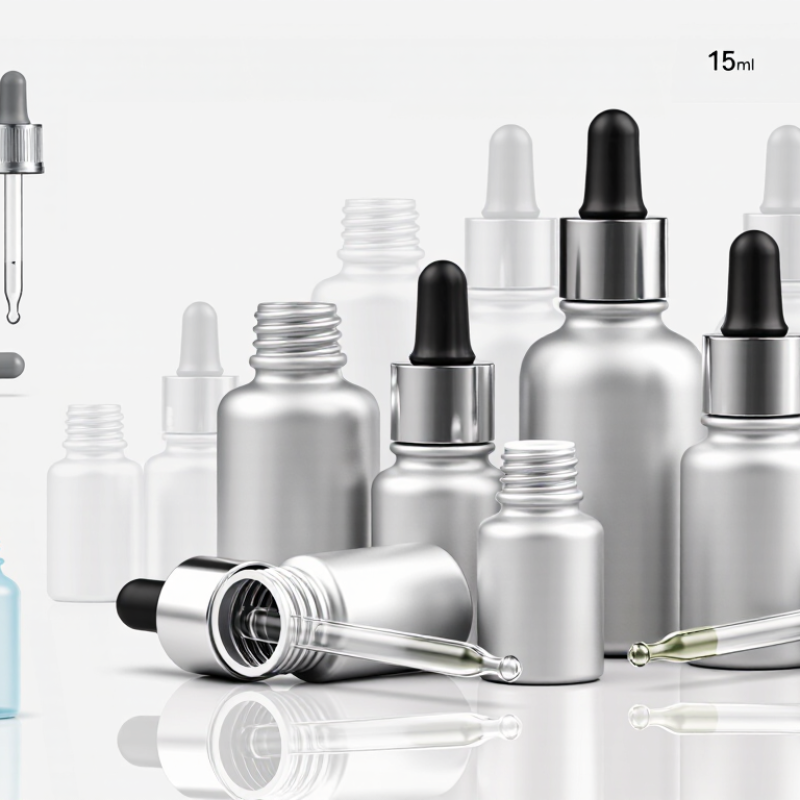
An aluminum dropper bottle combines a lightweight metal container with a pipette-style closure for controlled dispensing. The body is typically aluminum; the dropper may include a glass tube, a squeezable bulb, and a threaded cap. The opaque body helps shield light-sensitive contents, while its smooth exterior is easy to handle. Details vary by design.
To use it, squeeze the bulb before placing the pipette in the liquid. Release the bulb, and pressure draws liquid into the tube. Squeeze again to dispense drops. It sounds simple. In practice, the drop size can vary with liquid thickness, squeeze pressure, and pipette dimensions. A thick liquid may move slowly, while a thin one can run out quickly.
For buyers, check how the dropper fits the bottle neck and whether the closure has been tested for leakage. The bottle’s inside surface also matters: aluminum packaging may use an internal coating, and its compatibility should be confirmed for the intended formula. One trade-off is easy to miss: an opaque bottle hides the fill level. You may need a weight check or another inspection method during filling. A few drops can still cling inside the pipette, so dispensing is controlled, not perfectly exact.
Key Components, Materials, and Bottle Configurations
2026 Best Aluminum Dropper Bottles for Global Buyers?
Key Components, Materials, and Bottle Configurations
A dropper bottle is a small system, not just an aluminum shell. Buyers should check the neck finish, cap thread, pipette length, and bulb fit together. A glass pipette suits many liquid formulas, while polypropylene pipettes can reduce breakage during shipping. Bulbs may use silicone or other elastomers; confirm compatibility with the intended formula through testing. Small mismatches matter. A loose collar can leak, and a pipette that is too short may leave product behind.
Aluminum bodies are light and block light, but the inner coating deserves equal attention. Ask for coating specifications and compatibility results, especially if the contents are acidic or contain oils. The Aluminum Association’s 2023 U.S. aluminum-can recycling data reported a 43% recycling rate. That figure is useful material context, not a performance measure for dropper bottles; local collection systems and mixed-material closures can change recyclability.
Configurations often range from compact travel sizes to larger daily-use bottles, with straight or rounded shoulders and pipette orifice options. Match capacity to dose size and expected use, rather than choosing by appearance alone. Request samples and test filling, closure torque, leakage, and dropper return speed. Not every supplier tests these conditions consistently. That gap is worth questioning.
How to Match Bottle Capacity and Dropper Design to Product Needs
When choosing an aluminum dropper bottle, match capacity to how the product will be used, not just how it looks on a shelf. A compact bottle suits short routines, travel kits, or products dispensed in small amounts. Larger capacities reduce refill frequency but may feel less convenient for precise daily use. There is no perfect size for every product. The intended dose matters.
Dropper design affects control. A narrow pipette can help dispense thin liquids one drop at a time, while thicker formulas may move slowly or cling to the glass tube. Check that the pipette reaches near the bottle’s base; otherwise, usable product can remain inside. The bulb should feel easy to squeeze without releasing a sudden stream. Small differences matter.
A neat specification sheet can still mislead. Test filled samples with the actual formula, including repeated dispensing and storage in different positions. Check for leaks, awkward grip, and product left behind. Also confirm that the bottle’s inner coating and closure materials suit the formula; aluminum’s outer shell alone does not establish compatibility. It is tempting to select by capacity first. That shortcut can be wrong. A slightly smaller bottle with a well-matched dropper may be easier to use than a larger one that wastes each dose.
Global Compliance, Quality, and Sustainability Considerations
For global buyers, compliance begins with the formula, filling process, and destination market. Ask suppliers for current material declarations, coating specifications, and test reports covering the complete bottle-and-dropper assembly. An aluminum shell alone cannot confirm that its inner coating suits oils, serums, or acidic formulas. Request compatibility data from realistic storage conditions, including heat and repeated opening. Requirements differ by market.
Quality checks should include neck dimensions, closure fit, drop consistency, leakage after transit simulation, and coating condition around the shoulder. A polished prototype can still hide batch variation, so request production-lot samples and documented inspection limits. Appearance is not enough. Sustainability claims also need evidence. Aluminum is widely recyclable, but coatings, pipettes, bulbs, and mixed materials can complicate sorting. Ask for recycled-content documentation and local recycling guidance.
Tips: Keep a filled sample for a simple wear check. Record its weight, leakage, and drop behavior over several weeks. Compare results with the supplier’s specifications. No checklist catches every handling error, and that is worth admitting. A small, documented trial can reveal issues before a larger order.
How Buyers Can Compare Suppliers and Choose Bottles in 2026
Comparing aluminum dropper bottle suppliers in 2026 takes more than checking unit price. Ask for the alloy grade, wall thickness, internal coating details, and dropper material in writing. A 10–30 ml sample can reveal whether the shoulder dents easily or the pipette draws consistently. Small details matter.
Request a current specification sheet and a sample from the production line, not only a polished showroom piece. Check cap fit after repeated opening, leakage after inversion, and coating wear around the neck. Test the fit. Also confirm carton dimensions, minimum order quantity, lead time, and how defects are recorded. These details affect landed cost and launch timing, though forecasts can still be wrong.
Compare suppliers using the same written checklist, then ask how they control batch variation and handle replacement parts. For international shipments, clarify export documents, packing protection, and delivery terms with a qualified logistics partner. Do not assume “aluminum” guarantees compatibility: product contents and inner linings can interact differently. Run a small compatibility trial under your own storage conditions. It is slower. But one imperfect test is cheaper than thousands of bottles with a poor fit.