Why Choose a Multi Axis CNC Machine for Your Business Needs?
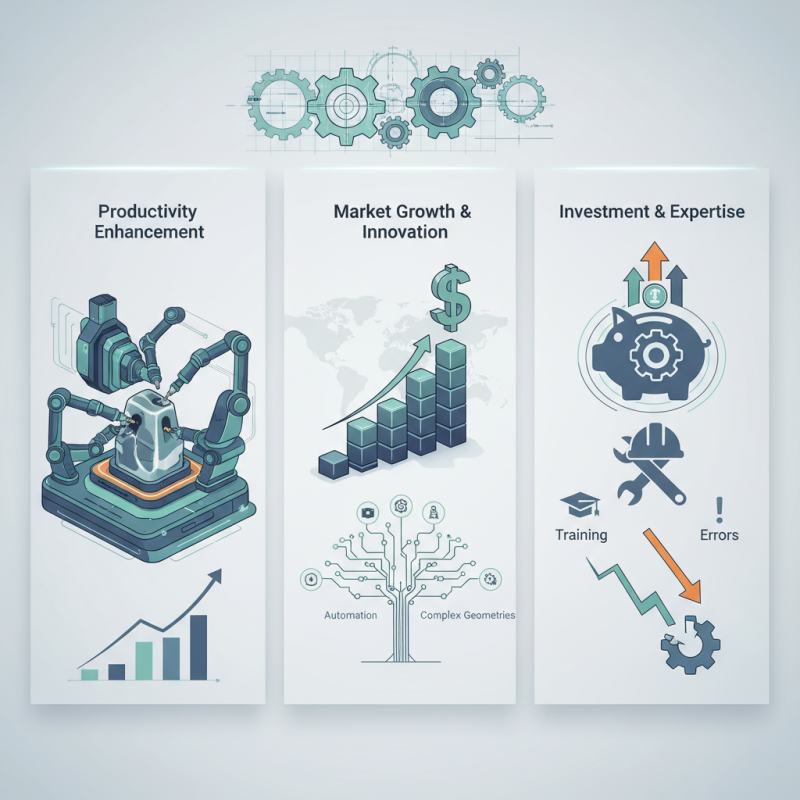
In today's competitive manufacturing landscape, businesses are increasingly turning to Multi Axis CNC Machines to enhance productivity. According to a recent market report by Grand View Research, the CNC machines market is projected to reach $100 billion by 2025, driven primarily by innovations in automation and precision machining. The demand for complex geometries is growing, and a Multi Axis CNC Machine is at the forefront of this shift.
Expert John Smith, a renowned figure in CNC machining, emphasizes, "Multi Axis CNC Machines are not just tools; they redefine manufacturing capabilities." This underscores the importance of these machines in producing intricate parts with high efficiency. Unlike traditional CNC machines, multi-axis machines can perform simultaneous operations from various angles, reducing production time and costs.
However, it's crucial to remember that adopting a Multi Axis CNC Machine requires a substantial investment and skilled operators. Some businesses may find the learning curve steep and need time to adapt. The potential for errors increases if operators lack proper training, leading to costly mistakes. Thus, thorough training and realistic expectations are essential when integrating these advanced machines into production lines.
Benefits of Multi Axis CNC Machines for Precision Machining
Multi-axis CNC machines offer significant benefits for precision machining. These machines can operate on multiple axes simultaneously. This capability allows for complex geometries that traditional machines struggle with. For example, a five-axis CNC machine can create intricate shapes with high precision in a single setup. This reduces handling and setup time, fostering increased productivity.
Accuracy is crucial in machining. Multi-axis machines achieve tighter tolerances than their conventional counterparts. The ability to machine multiple sides of a part in one go ensures that dimensions remain consistent. However, operators need to understand programming complexities. While these machines are powerful, they demand skilled operators for optimal performance.
Investing in multi-axis CNC technology might seem daunting. The initial cost is higher than traditional options. Yet, the long-term gains in efficiency and product quality often justify the investment. Companies may find that their production capabilities improve significantly. Embracing this technology can enhance competitiveness in a rapidly evolving market.
Types of Multi Axis CNC Machines and Their Applications
Multi-axis CNC machines are versatile tools used in various industries. They enhance precision and efficiency in manufacturing. There are primarily three types:
3-axis,
4-axis, and
5-axis CNC machines. Each type serves unique applications based on rotational capabilities and complexity.
The 3-axis CNC machine is the most basic model, managing X, Y, and Z axes. It’s ideal for straightforward tasks, like drilling and milling. Reports indicate that approximately 60% of manufacturers utilize 3-axis machines for basic cutting operations.
Meanwhile, the 4-axis machine adds a rotational axis, making it suitable for more complex parts, such as those with grooves or angled features. This versatility has led to a 20% increase in demand for 4-axis machines in the last few years.
5-axis CNC machines offer the highest complexity, enabling intricate designs with fewer setups. This capability is crucial for industries like aerospace and automotive, where precision is paramount. According to recent industry studies, 5-axis machines can reduce production time by 70% compared to traditional methods. However, challenges like higher operational costs and the need for skilled operators persist. These pitfalls necessitate careful consideration and evaluation of specific production needs.
How Multi Axis CNC Machines Enhance Manufacturing Efficiency
Multi-axis CNC machines have revolutionized manufacturing efficiency. They offer enhanced capabilities that traditional machining centers struggle to match. By utilizing multiple axes, these machines can perform complex operations in fewer setups, saving time and reducing material waste. The result? A streamlined production process with improved accuracy.
Imagine a component that requires various angles and contours. With a multi-axis CNC machine, manufacturers can create this part without repositioning it multiple times. This capability reduces the risk of errors during setups and increases overall productivity. Moreover, it allows for intricate designs that would be difficult with a standard CNC setup. Companies can deliver high-quality products faster while ensuring tight tolerances across different materials.
However, investing in multi-axis technology is not without challenges. The initial costs can be significant, and there is a learning curve. Operators require advanced training to harness the full potential of these machines. Some may find the programming complexity daunting. Nevertheless, the efficiency gained from multi-axis machines often outweighs these hurdles. Embracing this technology can be a game-changer for businesses aiming for growth and innovation in a competitive market.
Why Choose a Multi Axis CNC Machine for Your Business Needs?
| Dimension |
Description |
Benefit |
| Precision |
Ability to achieve tight tolerances and fine details in machining |
Improved product quality and reduced waste |
| Efficiency |
Fewer setups required for complex parts |
Increased production speed and lower labor costs |
| Versatility |
Ability to handle various materials and complex geometries |
Wider range of applications and capability to take on diverse projects |
| Automation |
Integration with advanced software and robotic systems |
Reduced manual intervention and consistent output |
| Cost-Effectiveness |
Higher initial investment but lower operational costs over time |
Long-term savings and improved ROI |
Key Features to Consider When Selecting a Multi Axis CNC Machine
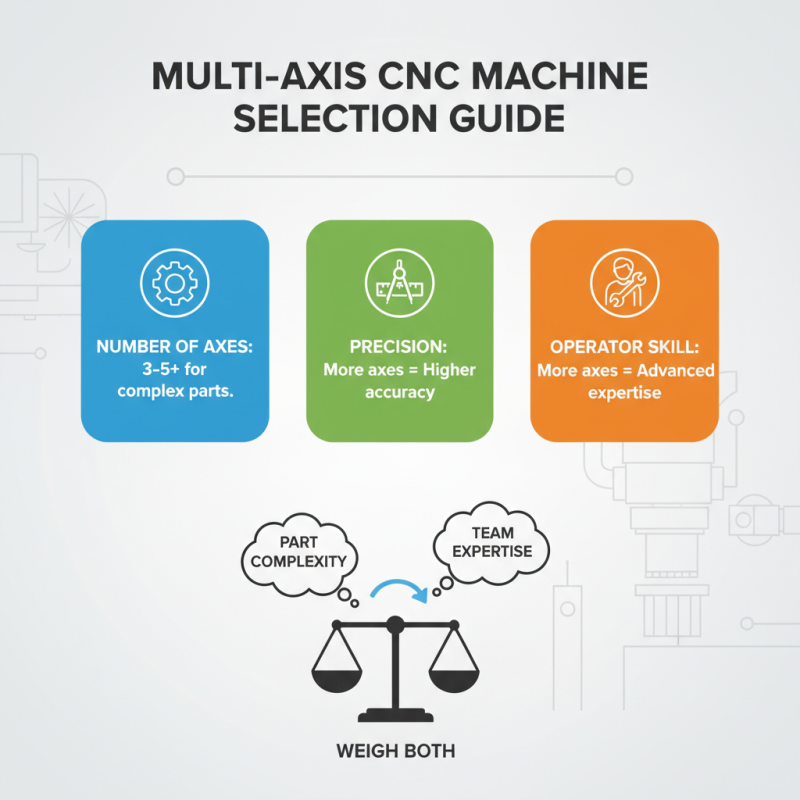
When selecting a multi-axis CNC machine, you should consider several key features. One significant aspect is the number of axes. Machines with three to five axes allow for complex parts to be machined efficiently. More axes can improve precision, but they also demand more skilled operators. It's crucial to weigh the complexity against your team's expertise.
Another important feature is the type of control system. Some machines use conversational programming, which is easier for beginners. Others have advanced CAD/CAM capabilities, suitable for detailed designs. Consider the learning curve for your workforce. It can be a challenge if your team is unfamiliar with sophisticated programming.
Additionally, pay attention to the machine's build quality and rigidity. A solid structure reduces vibrations during machining, leading to a higher quality finish. However, more robust machines can be pricier and require more maintenance. Assessing your production needs is vital. A machine suited to small batch work may not perform well for large production runs. Balancing cost, performance, and usability will guide your decision effectively.
Impact of Multi Axis CNC Technology on Cost Reduction and Profitability
Multi Axis CNC technology significantly impacts cost reduction and profitability in manufacturing. This advanced machining allows for more complex parts to be produced in fewer setups. With multi-axis capabilities, businesses can reduce material waste. Less setup time means increased efficiency and quicker turnaround on orders.
Using a multi axis CNC machine often leads to improved precision, which is crucial in tight-tolerance industries. Parts that require fewer errors save money over time. However, there’s a learning curve associated with these machines. Not all operators may be familiar with multi-axis programming. This could lead to initial mistakes and higher costs until mastery is achieved.
Another consideration is the upfront investment. The cost of multi-axis machines can be considerable. Yet, many businesses find that the long-term savings outweigh the initial expense. As productivity increases, profit margins improve. Companies can expand their capabilities and take on more complex projects, ultimately driving growth.