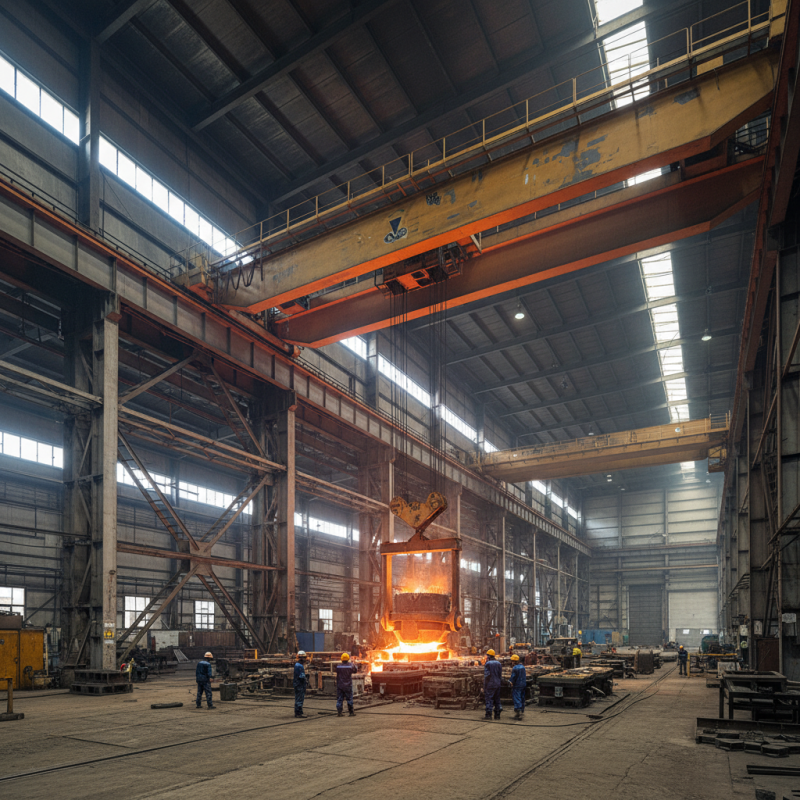
How to Choose the Right Metallurgical Bridge Crane for Your Needs?
Choosing the right Metallurgical Bridge Crane can be challenging. This equipment plays a crucial role in many industries. It helps with heavy lifting and precise movements in metal processing plants.
When selecting a Metallurgical Bridge Crane, consider various factors. Think about the weight capacity needed based on your specific tasks. Crane height is another key element, as it must fit your work environment. The speed of lifting and travel influences efficiency in daily operations. Safety features shouldn't be overlooked; they ensure a secure working environment.
Many companies make mistakes in their choices. They might overlook important specifications or fail to consider future needs. This can lead to operational disruptions and increased costs. Reflecting on these aspects can lead to better decisions. Ultimately, a well-chosen Metallurgical Bridge Crane enhances productivity and safety in the workplace.
Choosing the Right Type of Metallurgical Bridge Crane for Your Project
Choosing the right type of metallurgical bridge crane is crucial for your project's success. Start by assessing your specific needs. Understand the weight of the materials you will lift and the span required for your operations. It’s not just about capacity; consider the environment where the crane will operate. Will it be in a hot, dusty area? These factors can influence your choice dramatically.
Next, evaluate the crane's features. Some cranes come with advanced controls, while others have basic functionalities. Reflect on the level of operator skill available. A complex crane can be a challenge for inexperienced users. Think about the ease of maintenance as well. A more intricate design may require specialized knowledge, which might not always be available on-site.
Don't forget about the safety features. Cranes should have alarms and emergency stops. These can be overlooked in the selection process. Moreover, it's important to consider longevity. A cheaper model might save money initially but could incur higher costs later due to repairs. Always weigh short-term savings against long-term needs.
Understanding Load Capacity Requirements in Metallurgical Bridge Cranes
Choosing the right metallurgical bridge crane requires a deep understanding of load capacity requirements. Load capacity refers to the maximum weight a crane can safely lift and transport. This is crucial in preventing accidents and ensuring operational efficiency. According to industry reports, a bridge crane’s load capacity can vary significantly depending on design and materials used. Some can lift up to 100 tons, while others handle lighter loads.
When assessing load needs, consider not only the maximum weight but also the type of material handled. Heavy metals like steel require different handling mechanisms compared to lighter materials. It's important to calculate the load's center of gravity to avoid instability.
Tips: Always factor in potential overloads. A margin of safety in load calculations is wise. Consult with a crane specifications expert if uncertain. It's better to choose slightly higher capacity than to risk accidents.
Operational conditions also matter. Indoor environments may have different requirements than outdoor settings. Be aware of temperature variations that could affect crane performance over time. Regular inspections and maintenance are needed to uphold safety standards. A comprehensive understanding of these factors contributes to selecting the ideal bridge crane for your metallurgical needs.
Assessing Span Length and Lift Height for Optimal Crane Performance
When selecting a metallurgical bridge crane, determining the right span length and lift height is crucial. The span length refers to the distance between the crane's supporting structures. Consider the size of your workspace. If the area is restricted, a shorter span may be needed. However, extensive operations benefit from longer spans, allowing for maximum coverage.
Lift height is another critical factor. It directly affects how high materials can be raised. Assess the tallest point in your facility. Ensure that the crane can clear this height comfortably. If your facility has overhead obstructions, account for them in your planning.
Tips: Measure the distances accurately. Use tape or laser measuring tools for precision. Double-check your calculations. Mistakes in measurements lead to costly adjustments later. Don't underestimate your needs. A crane that’s too small can affect productivity. Plan for future expansion. You might need a larger reach as your operations grow.
Always keep safety in mind. A poorly scaled crane can be a hazard in busy environments.
Evaluating Material Handling Solutions in Heavy Industry Applications
Choosing the right metallurgical bridge crane can significantly impact material handling in heavy industries. Understanding specific needs is crucial. Consider weight capacity, span length, and lifting speed. Each application has unique demands. Unused capacity can lead to inefficiencies. Too much speed may compromise safety.
Tips: Evaluate your material types and weights carefully. Consider the environment too. Is it hot or dusty? These factors affect crane performance. User feedback can provide insights, but remember that every operation is different.
Also, investigate maintenance requirements. A more complex crane may need more frequent service. Simple designs often lead to fewer issues. However, complexity might offer better performance. Balancing these aspects is vital. Reflect on past experiences to guide future choices.
Safety Standards and Compliance Considerations for Bridge Cranes
When selecting a metallurgical bridge crane, safety standards are paramount. Compliance with regulations protects workers and equipment. Different work environments require specific safety measures. Be aware of local regulations that apply to crane operations. Using non-compliant equipment can lead to accidents. This could endanger lives and disrupt operations.
Consider the crane's load capacity, as this influences safety measures. Overloading a crane can cause mechanical failures. Inspect the crane regularly to maintain compliance. Operators should be trained in safety protocols. Proper training helps prevent accidents and ensures efficient operation. Sometimes, training programs may lack depth; this should be addressed.
Safety features like emergency stops and overload warnings are vital. These elements provide additional layers of protection. Routine audits can highlight weaknesses in safety practices. Reflection on these practices should lead to continuous improvement. Evaluate operational processes regularly to keep safety at the forefront. Making these considerations can enhance productivity while safeguarding workers' well-being.