
Top Custom 3D Medals for Events and Awards?
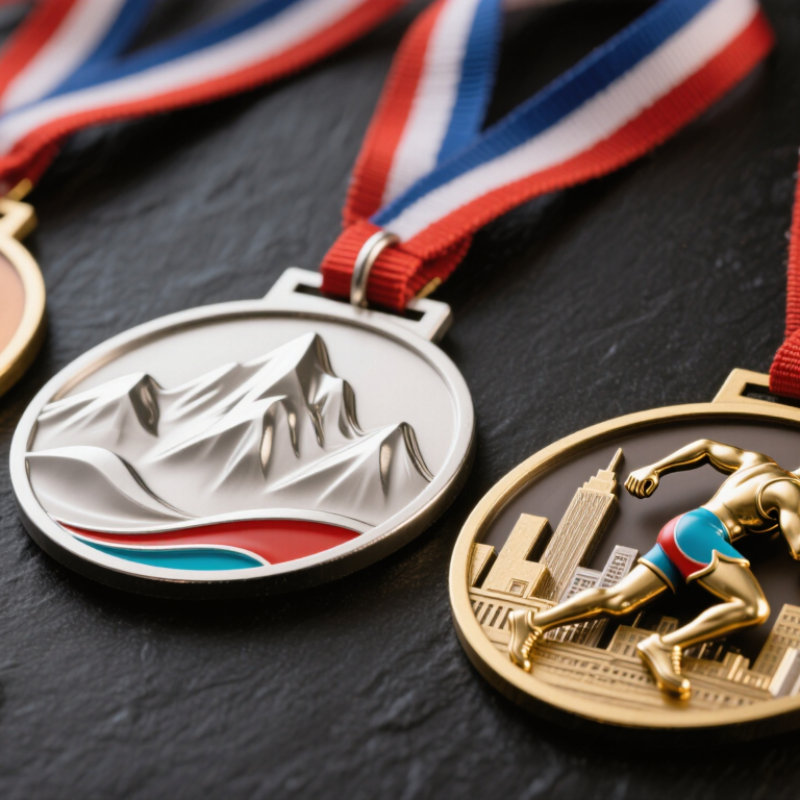
A standout medal should tell the story of an event before anyone reads the inscription. Custom 3D Medals make that possible through sculpted relief, layered details, and finishes that catch the light. A raised mountain ridge, a runner in motion, or a small city skyline can turn a familiar award into a keepsake people want to display.
Design decisions matter. Deep relief can make a central emblem feel bold, while polished edges add contrast against antique finishes. Enamel brings color, but too many shades may compete with fine details. The reverse deserves care, too: an event date, short message, or sponsor mark can make the medal useful long after the ceremony. As an illustrative expert voice, fictional medal-design specialist Alex Morgan puts it this way: “The best 3D medal gives every detail a reason to be there.” This is an original illustrative quote, not a sourced statement from a real person.
There is no single design that suits every award. A school competition may call for bright colors and sturdy ribbons; a formal recognition program may benefit from restrained metal tones and precise engraving. Before approving production, review the artwork at actual size and ask how small features will appear in metal. Tiny lettering can vanish. Even a striking concept may need simplification. This guide explores standout custom 3D medal ideas, material and finish choices, and practical design considerations for events and awards. The aim is not simply to make a medal look impressive, but to make its details feel meaningful in the hand.
What Custom 3D Medals Are and How They Differ from Flat Medals
Custom 3D medals have sculpted depth: a runner’s shoe can rise above the field, while a recessed background adds shadow. Flat medals usually rely on printed color, engraving, or shallow surface detail. The distinction is tactile. Turn a raised medal under a desk lamp, and highlights shift across its edges. “3D” describes the surface, not necessarily the production method; a medal with relief may be cast or struck, rather than 3D-printed. That detail matters.
Wohlers Report 2024 estimated that the global additive manufacturing industry reached $20.035 billion in revenue in 2023, growing 11.1% from the year before. This is industry-wide context, not evidence of medal sales. It does show how digital design and production tools continue to develop. For event organizers, deeper relief can make a date, emblem, or finish line easier to feel and notice. It can also add weight, cost, and small features that are harder to reproduce consistently. More depth is not always better. A crowded design may lose clarity when scaled down, and an intricate edge can feel rough in the hand. Request a sample or a clear proof, then inspect the smallest lettering and raised details before approving production. A flat medal can still be the more readable choice.
Custom 3D Medals vs. Flat Medals
3D medals emphasize sculptural volume, while flat medals emphasize a planar format and can still include raised or recessed relief. Scores are qualitative design comparisons, not standardized measurements; individual designs vary.
How 3D Medal Designs Are Created and Manufactured
A custom 3D medal begins with a clear idea: a raised emblem, sculpted lettering, or a textured border. Designers turn the artwork into a digital model, setting the height and depth of each feature. This step matters. Fine lines that look crisp on a screen may soften when manufactured, especially on a small medal. A practical design keeps the main symbol bold and the smallest details easy to read.
Once the model is approved, a sample or digital proof helps check proportions before production. Depending on the design and material, medals may be cast or struck in metal. The chosen process affects how sharply details appear. After forming, the surface can be polished, plated, colored, or given an antique finish. A polished render can still mislead: real metal reflects light differently, and tiny variations may appear between pieces. Review the proof carefully, and ask how the final finish will affect recessed areas and raised edges.
Tips: Keep text short and use strong contrast between raised and recessed details. Request a scale reference before approving the model. Check the edge, thickness, and attachment point, too. Small changes matter. Don’t expect every fine texture to remain visible; simplify where needed.
Popular Materials, Finishes, and Attachment Options
Material choice affects a 3D medal’s weight, detail, and feel in the hand. Zinc alloy suits raised lettering and sculpted edges, while iron offers a sturdy, often heavier option. Brass can create a substantial feel, though fine detail and cost should be checked with the maker. Ask for a sample when possible. A small relief feature may look crisp on screen but soften at production scale.
Finishes shape how the design reads under event lighting. Polished gold, silver, or bronze catches light, while antique plating darkens recessed areas and makes raised details stand out. Matte finishes reduce glare and can give dense artwork a calmer look. Enamel adds distinct color fields, but narrow lines may not fill cleanly. There is no perfect finish; viewing a physical sample can reveal details that a digital proof misses.
Attachment options should match how recipients will wear or display the medal. A fabric ribbon with a secure ring is common for ceremonies, while a split ring can suit keepsake designs. For badges worn on clothing, a pin fitting may work better, but it can feel less comfortable on delicate fabric. Check the attachment’s weight and movement with the finished medal. Test the fit. A beautiful piece can still swing awkwardly.
Types of Custom 3D Medals for Events and Awards
Custom 3D medals can turn an event emblem into a small object people enjoy examining. Raised-relief medals use lifted lettering or figures against a flatter background. They work well for race crests, anniversary dates, and team symbols. The contrast is easy to read when someone views the medal from arm’s length. Small details matter.
Layered relief medals add depth through several levels, such as a raised figure above a textured field. Deep sculpted designs create a bolder, more dimensional look, but tiny lines may soften during production. Ask for a clear digital proof, then check the lettering, edges, and smallest features. A design that looks crisp on screen may need simplifying at medal size.
Openwork medals use cutout spaces to shape a silhouette or reveal a contrasting layer behind it. Spinning or movable elements can add interaction, though they need enough clearance to move freely. Two-sided 3D medals give organizers room for a front emblem and a reverse with event details or award placement. Less can be more. Match the medal style to how it will be used: a lightweight participant keepsake has different needs from a substantial trophy medal. And sometimes, I still find that a simpler relief feels more memorable than a crowded design.
How to Choose a 3D Medal for an Event or Award
A 3D medal should reflect the event, not just look impressive in a sketch. Start with its purpose: a finisher award may need a bold symbol, while a long-service honor may call for restrained detail. Check that the main shape remains clear at the medal’s actual size. Raised lettering, recessed lines, and layered relief can add depth, but tiny text may blur or crowd the design. Small details disappear.
Choose dimensions, thickness, and material with the wearer in mind. A large, heavy medal can feel substantial, yet become uncomfortable on a ribbon after a long ceremony. Consider how it will be displayed, too: a flat back may sit neatly in a case, while a custom edge can strengthen a distinctive outline. Ask for a scaled drawing or sample before approving production. It may reveal issues the screen hides. I have seen attractive concepts lose clarity when reduced; that is worth checking early.
Tips: Limit the design to one or two focal elements. Confirm the spelling, date, and ribbon colors in a final proof. If the medal uses several finishes, ask how they will appear under indoor lighting. Keep a little space around the lettering.
Top Custom 3D Medals for Events and Awards? - How to Choose a 3D Medal for an Event or Award
| Medal Option | Best Suited For | Common Material | Typical Size and Thickness | 3D Relief and Detail | Finish Choices | Attachment | Selection Considerations |
|---|---|---|---|---|---|---|---|
| Die-Cast Zinc Alloy | Road races, school competitions, festivals, and general participation awards | Zinc alloy | Often 50–70 mm across and about 3–5 mm thick | Suitable for raised and recessed relief, shaped outlines, and moderately detailed designs | Antique gold, silver, or bronze; bright metal plating; optional color fill | Ribbon attached through a loop or a separate ring | A versatile choice for custom shapes and bold relief. Fine details should be simplified so they remain clear at the finished size. |
| Die-Struck Brass or Iron | Formal award ceremonies, club honors, commemorative events, and presentation pieces | Brass or iron, depending on the design and production method | Commonly around 45–65 mm across; thickness varies with the design | Works well for clean, defined relief and engraved-style details; deep sculpted forms may be more limited than on thicker cast medals | Polished or antique metal finishes; enamel may be available for selected designs | Ribbon, neck ribbon, or pin-back fitting depending on use | Consider this option when a crisp, traditional appearance matters. Confirm that the artwork is suitable for the chosen striking process. |
| High-Relief Cast Medal | Milestone races, championship awards, anniversary events, and premium commemoratives | Usually zinc alloy or another cast metal | Often 60–90 mm across and approximately 4–8 mm thick | Deeper sculpting can emphasize figures, landmarks, layered lettering, and prominent centerpieces | Antique or polished plating, with optional color accents | Ribbon through a reinforced loop; larger medals may use a wider ribbon | Greater size and relief can increase weight and cost. Check the back design, edge, loop strength, and wearing comfort before approval. |
| Two-Sided Custom Medal | Events that need separate artwork for the event logo, route, date, results, or sponsor-free event information | Commonly die-cast zinc alloy | Typically 50–75 mm across and about 3–6 mm thick | Relief can appear on one or both faces; detail depends on available space and relief depth | Matching or contrasting metal finishes on the two faces; optional color fill | Ribbon attached with a loop or ring | Use the second face for information that adds meaning. Allow enough clear space for text and review both sides in the production proof. |
| Cut-Out or Custom-Outline Medal | Events with a distinctive silhouette, such as a route shape, animal, object, or local landmark | Usually die-cast zinc alloy or stamped metal | Often 50–75 mm at the widest point; dimensions depend on the outline | Open areas and shaped edges create visual interest; relief can be added to solid sections | Antique or bright metal finishes; optional enamel details | Top loop, side loop, or ring, designed around the medal’s balance | Check that narrow bridges and small cut-outs are sturdy enough. An uneven shape may need a carefully positioned attachment to hang straight. |
| Color-Fill 3D Medal | Youth events, themed celebrations, team awards, and designs with clear color-coded sections | Most often a plated zinc-alloy base | Commonly 50–70 mm across and about 3–5 mm thick | Raised metal borders separate recessed color areas; 3D relief can be combined with enamel fill | Soft or hard enamel-style color fill with a selected metal plating | Ribbon, neck ribbon, or ring attachment | Choose colors with strong contrast and avoid very small fill areas. Color appearance can vary, so review a production proof or color reference. |
| Large Statement Medal | Major races, final-round competitions, and special awards intended to stand out visually | Typically zinc alloy or another cast metal | Often 75–100 mm across; thickness is design-dependent | Provides room for larger sculpted elements, layered scenes, and readable event details | Antique, polished, or mixed-metal-look finishes; optional color accents | Wide ribbon and a suitably reinforced loop are often appropriate | Confirm overall weight, ribbon width, attachment strength, and packaging. A larger medal may be less comfortable for young participants to wear. |
Note: Dimensions are general planning ranges, not fixed specifications. Available materials, relief depth, finishes, production time, and minimum order quantities vary by manufacturer and design. Request a dimensioned proof and confirm the material, weight, attachment, and finish before placing an order.