Who Are the Top Formwork Suppliers in China?
China’s construction sector offers a wide range of formwork systems, from lightweight aluminum panels to heavy-duty steel assemblies. Choosing a formwork supplier in china involves more than comparing prices or browsing product photos. Buyers need to assess design support, material specifications, production capacity, and communication during the project. Small details matter: panel dimensions, tie-hole spacing, surface finish, and the way components are packed for shipment.
This guide introduces leading Chinese suppliers and explains what distinguishes their products and services. It considers system types, customization options, quality documentation, and experience with projects of different sizes. A polished catalogue is useful, but it cannot confirm how a supplier handles changing drawings or replacement parts. Ask for technical files, project references, and clear answers about tolerances and delivery schedules. Check those details.
No shortlist can suit every contractor. A supplier that works well for a high-rise project may not fit a small residential build. Even strong manufacturers can have gaps in after-sales support or documentation, so comparisons should include practical questions, not just brand claims. Use the overview as a starting point, then verify specifications and samples directly. Careful checking takes time. It can also prevent costly surprises on site.
Formwork Systems and Their Role in China’s Construction Industry
Formwork systems give fresh concrete its shape and support it while it gains strength. In China’s construction industry, they are used for apartment towers, bridges, stations, and industrial buildings. A system may include panels, ties, props, and access platforms. Each part must fit the project’s dimensions and planned pour sequence. Small details count.
Suppliers contribute more than panels. They help project teams select materials, check layouts, and plan delivery cycles. Steel systems can suit repeated use and demanding loads, while timber or aluminum options may work better for other shapes or site conditions. The right choice depends on design, labor skills, transport, and reuse plans. A low purchase price can hide extra handling or repair costs.
Good coordination matters on site. Panels should arrive in workable batches, and crews need clear assembly guidance. A drawing may look tidy but still miss a congested corner or an awkward lifting route. That happens. Project teams should review load assumptions, inspection steps, and stripping times with qualified professionals. A reliable supplier explains limits plainly, rather than promising one system will fit every job. When comparing formwork suppliers in China, buyers can examine technical support, production consistency, delivery records, and replacement-part availability.
How China’s Formwork Supply Market Is Organized
China’s formwork supply market is organized around several layers, not a single national channel. Manufacturers produce aluminum, steel, timber, and plastic systems. Regional distributors move standard panels and accessories, while rental companies provide reusable equipment for projects with limited storage or short schedules. Some suppliers also coordinate design, delivery, and on-site technical support. The boundaries can blur: a company may manufacture panels and rent them out. That makes supplier comparisons less tidy than a simple factory list.
The scale of construction helps explain this varied structure. The National Bureau of Statistics’ 2023 Statistical Communiqué reported construction-industry output of 31.59 trillion yuan. That figure covers the wider sector, not formwork alone, so it should not be treated as a formwork-market estimate. Still, it points to a large, geographically dispersed customer base.
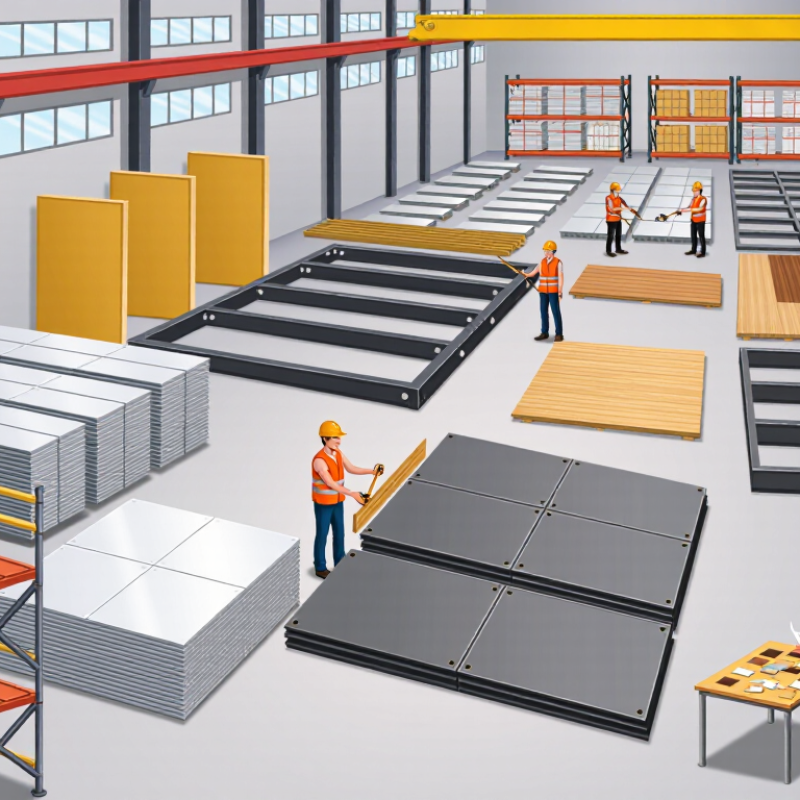
Buyers often source locally to reduce transport time and avoid moving heavy panels across provinces. A stack of steel frames beside a site gate is a practical reminder: logistics can matter as much as unit price.
Procurement also differs by project. Large contractors may purchase a designed system for repeated use, while smaller projects often rent panels and accessories. Technical drawings, panel condition, replacement terms, and delivery timing deserve close review. One weakness in this market is inconsistent product descriptions; “complete system” can mean different things between suppliers. Ask for a component list. Then check it against the site’s actual pour sequence.
Leading Formwork Suppliers in China and Their Specialties
China’s leading formwork suppliers are best compared by their specialties, not by a single ranking.
The National Bureau of Statistics reported construction output value of 31.59 trillion yuan in 2023. That figure describes the wider construction sector, not formwork sales, but it shows the scale of the market suppliers serve.
Aluminum-formwork specialists suit repetitive residential floors, where panels can be reused across similar layouts. Steel-system suppliers often focus on bridges, tunnels, and heavy infrastructure, where loads and geometry demand robust components. Timber and film-faced plywood suppliers offer flexible panel sizes for varied pours and smaller projects.
Some manufacturers also provide climbing systems, design support, and on-site installation. Details matter. A panel that looks efficient in a catalogue may be awkward to move through a crowded site.
Buyers should compare stated reuse cycles, connection methods, repair requirements, and local technical support. Supplier claims can be hard to compare; published test conditions are not always identical. That distinction is easy to miss.
National Bureau of Statistics, 2023 construction industry data.
Key Criteria for Comparing Chinese Formwork Suppliers
When comparing Chinese formwork suppliers, look beyond the quoted price. Ask for engineering drawings, load calculations, material specifications, and clear tolerances. Check whether panel dimensions match your project’s grid and whether tie holes align on site. Small mismatches waste labor. Review sample panels and inspect welds, edge finish, and coating thickness before approving a large order. Request references for projects with similar spans, concrete pressure, and reuse cycles. A polished catalogue is not proof of field performance.
Production control and delivery matter just as much. McKinsey’s 2017 report, Reinventing Construction, estimated construction productivity growth at about 1% annually over two decades, versus 3.6% in manufacturing. That gap makes repeatable assembly and fewer site adjustments practical measures of supplier quality. Ask how defects are recorded, how replacement parts are handled, and whether delivery dates are tracked against purchase orders. The 2023 Global Status Report for Buildings and Construction estimated that the sector accounted for 37% of global energy-related and process-related CO2 emissions. This supports asking about steel sourcing, product durability, and reuse options, though a supplier’s environmental claims still need evidence. No scorecard is perfect. I would also test one shipment first; paperwork can look better than the panels.
| Comparison Criterion | Suggested Weight | What to Compare | Evidence to Request or Verify |
|---|---|---|---|
| Engineering and design support | 15% | Ability to prepare formwork layouts, shop drawings, and project-specific design calculations for the required structure and construction sequence. | Sample drawings and calculations; stated design assumptions; confirmation of who reviews and approves the design. |
| Product range and system suitability | 10% | Availability of relevant systems, such as wall, column, slab, climbing, or table formwork, and compatibility with the project’s geometry and construction method. | System catalogs, component lists, installation guidance, and examples showing the proposed system in a comparable application. |
| Materials and technical specifications | 15% | Specified materials, dimensions, connection details, surface finish, and design capacities for the exact components and configurations being offered. | Technical data sheets, material certificates, and test reports where applicable. Confirm that capacity values identify the relevant component, configuration, and test or design basis. |
| Quality management and production control | 15% | Documented inspection procedures for incoming materials, fabrication, dimensional checks, welding where applicable, finishing, and final packing. | Quality-management documentation, inspection and test plans, sample inspection records, and an agreed process for handling nonconforming products. |
| Relevant project experience | 10% | Experience with similar structure types, project scale, concrete placement requirements, and site conditions. | Project references or case studies that can be checked, with the system type, scope supplied, and project context clearly stated. |
| Customization and interchangeability | 10% | Ability to meet project-specific dimensions and details, and clarity about which components are standard, customized, or compatible with other systems. | Dimensioned drawings, a component schedule, written compatibility limits, and confirmation of any tooling or minimum-order requirements. |
| Safety and technical documentation | 7% | Clarity of assembly, use, inspection, and dismantling instructions, including stated limitations and safety precautions. | Installation and operating manuals, component identification details, and project-specific design documentation. Check applicable local requirements for the project location. |
| Export packing and logistics | 8% | Packaging method, shipment planning, delivery terms, documentation, and the supplier’s ability to meet the project schedule. | Packing list format, proposed shipment plan, stated lead times, delivery-term quotation, and procedures for reporting transit damage or shortages. |
| After-sales and site support | 5% | Availability and scope of technical assistance before and after delivery, including response arrangements for installation questions. | Written support scope, contact and escalation process, service availability, and any applicable charges or exclusions. |
| Commercial transparency | 5% | Clarity of quotation scope, quantities, exclusions, payment terms, warranty conditions, and pricing for replacement parts. | Itemized quotation, documented warranty terms, confirmation of included services, and written change-order procedures. |
| Total suggested weighting | 100% | Suggested evaluation weights for comparing bids; adjust them to reflect project priorities. Technical capacities and compliance requirements must be verified for the specific system and project. | |
How to Select a Formwork Supplier for a Construction Project
Selecting a formwork supplier means checking more than price per square metre. Ask for load calculations that match your concrete pressure, pour rate, wall height, and tie spacing. Request material certificates, panel dimensions, allowable deflection, and clear instructions for assembly. On site, a few millimetres of mismatch can slow a pour or leave visible offsets. Fit matters.
The Autodesk and FMI report Harnessing the Data Advantage in Construction (2021) found that 14% of rework was attributed to poor project data. Ask how the supplier controls drawing revisions, confirms quantities, and handles design changes. Request references for projects with similar structures, climates, and schedules. Check sample panels and connection hardware before placing a large order. A tidy catalogue is not proof. Delivery capacity matters too: confirm packing lists, replacement-part lead times, and who answers technical questions during installation. Compare total project cost, including labour, transport, reuse cycles, and storage—not just the initial quote. I would still verify every claimed reuse figure against the actual site conditions; catalogues rarely capture rough handling or rushed stripping.
How to Select a Formwork Supplier for a Construction Project
How to use this chart: These illustrative weights provide a starting point, not market-survey results. Adjust them for project requirements, then compare suppliers on verified product quality, engineering support, total cost, delivery capability, customization, safety compliance, and after-sales service.