Top 10 HEPA Air Filter Suppliers for Global Buyers
Clean air is now a procurement priority for hospitals, laboratories, manufacturers, and building operators. The World Health Organization’s 2022 air quality update reports that 99% of the global population breathes air exceeding its recommended limits. That figure highlights the need for dependable filtration, but it does not make every HEPA product interchangeable.
The U.S. Department of Energy’s widely cited HEPA benchmark is 99.97% particle removal at 0.3 microns. Buyers should still check which test method and classification apply. Standards such as EN 1822 and ISO 29463 help classify high-efficiency filters, while actual performance depends on the product, installation, and operating conditions. A specification sheet is only a starting point. Details matter.
This guide to the Top 10 HEPA Air Filter Suppliers for Global Buyers offers a practical starting point for comparing manufacturers and distributors. It considers product range, documented testing, manufacturing capacity, customization, traceability, and support for international orders. The search phrase “Air Filter Hepa” may lead buyers to many listings, but a familiar label alone proves little. Ask for current test reports, confirm the rated airflow and pressure drop, and clarify replacement availability before ordering. No supplier is perfect for every project; lead times and service can vary by region. That part is easy to overlook. The comparison aims to inform due diligence, not replace technical review by qualified facility or filtration professionals.
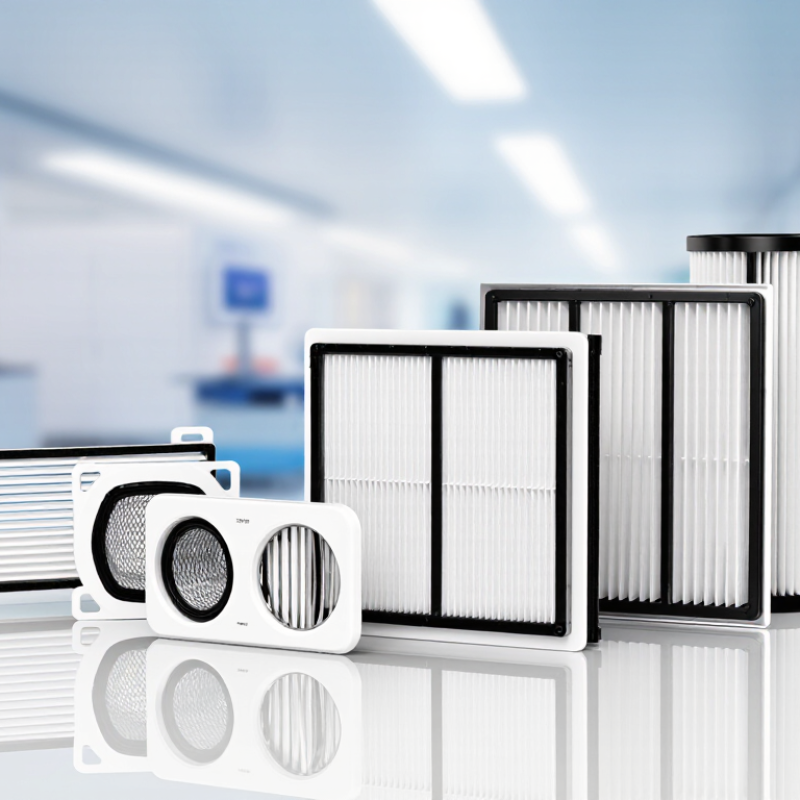
HEPA Basics: The U.S. DOE Benchmark of 99.97% Efficiency at 0.3 µm
The U.S. Department of Energy benchmark commonly associated with HEPA filters is 99.97% efficiency at 0.3 micrometers. In practical terms, a properly tested filter captures at least 99,970 of every 100,000 particles of that test size under specified conditions. The figure is useful, but it is not a promise of identical results in every air-cleaning unit.
The 0.3 µm size is a benchmark, not a particle-size cutoff. Filters can also capture particles both smaller and larger, though performance depends on the filter design and test method. Numbers need context. A supplier’s efficiency claim should be supported by clear test documentation, including the tested filter configuration and operating conditions. Ask whether the result applies to the filter media alone or to the assembled filter, where gaps around seals can affect performance. That detail matters.
For global buyers, compare airflow resistance as well as capture efficiency. A dense filter may meet the benchmark yet restrict airflow in equipment not designed for it. Check dimensions, gasket placement, and replacement compatibility against the actual housing. Even careful specifications can leave questions; a report may not reflect the way a filter performs after installation or as dust accumulates. Reliable sourcing starts with verifiable test evidence and realistic operating requirements.
Filter Grades Explained: EN 1822 H13 and H14 MPPS Efficiency Thresholds
When comparing HEPA suppliers, check the test basis, not just the grade label. Under EN 1822, H13 filters require at least 99.95% efficiency at the most penetrating particle size (MPPS). H14 requires at least 99.995%. These thresholds describe performance at the hardest particle size to capture, not every particle size equally. MPPS often falls around 0.1–0.3 micrometres, though the exact point depends on the filter media and construction. Tiny numbers matter.
Ask for a report identifying the filter model, airflow, MPPS, and pressure drop. EN 1822 testing assesses efficiency and checks for leaks in individual filters. An average result can hide a local weak spot. Even a correctly classified H14 filter can lose practical value if seals are damaged or the frame is poorly fitted. Check gasket compression and clamping during installation. Fit matters.
For international purchases, confirm that documentation matches the delivered filter and its configuration. Changes in media, pleat spacing, or frame dimensions can affect performance. One awkward point: paperwork cannot prove an installation is sound. A visual check helps, but it does not replace suitable system testing. Grade selection should reflect the required cleanliness, operating airflow, and pressure-drop limits—not simply the highest available number.
How to Compare 10 Global HEPA Suppliers by Products, Markets, and Certifications
Comparing ten global HEPA suppliers works best when your shortlist reflects the equipment, not just a catalog headline. Check whether each supplier makes complete filters, replacement media, or both; these capabilities affect lead times and customization. Ask for rated airflow, initial pressure drop, dimensions, and a clearly stated efficiency class. Small details matter. Two filters with similar efficiency claims may perform differently in a compact ceiling unit or a high-dust process. Request finished-filter test reports, not only media data. EN 1822 and ISO 29463 can provide useful reference points when applicable to the product and market.
Compare export experience in your target regions, including packaging, documentation, and after-sales support. Certifications should match the facility and buyer’s requirements; an ISO management certificate does not prove filter performance. Confirm test methods, traceability, batch records, and how defects are handled. A sample can help. Test it at your operating airflow, then inspect frame sealing, fit, and pressure readings. Price matters, but so do replacement intervals and shipping consistency. Some comparisons remain imperfect: suppliers may test different sizes or conditions, making headline figures hard to align. Ask them to explain the gaps.
Suggested buyer evaluation weights for comparing 10 global HEPA suppliers. These are planning weights, not measured supplier ratings. Compare product range, target markets, and applicable certifications using current supplier documentation.
Supplier Evaluation Metrics: Airflow, Pressure Drop, Testing, and Service Life
When comparing Hepa Air Filter suppliers, check airflow at the intended operating point, not just the maximum figure on a datasheet. Ask for rated airflow and the conditions used to measure it. Numbers need context. At a fixed airflow, compare initial pressure drop; a high reading can increase fan energy use and reduce system performance. Confirm that the filter dimensions and sealing arrangement match your housing.
Testing records should identify the method, test aerosol, particle size, and whether results apply to each unit or a sampled batch. Standards such as EN 1822 or ISO 29463 can help buyers compare performance, but the test scope still matters. Request a current report and clarify how the supplier checks media integrity and frame leakage. A polished certificate alone is not enough.
Service life depends on dust concentration, operating hours, humidity, and the pressure-drop limit set by the facility. Be cautious of fixed replacement intervals without supporting conditions. Ask for recommendations based on actual loading and for guidance on monitoring pressure drop in service. I have seen procurement tables treat lifespan as a simple number; that shortcut can mislead. Suppliers should explain assumptions, replacement criteria, and what support is available when field readings differ from estimates.
Top 10 HEPA Air Filter Suppliers for Global Buyers — Supplier Evaluation Metrics: Airflow, Pressure Drop, Testing, and Service Life
A practical, brand-neutral scorecard for comparing suppliers. The order below ranks evaluation priorities, not individual companies.
| # | Evaluation metric | What to request and compare | Verification notes |
|---|---|---|---|
| 1 | Airflow rating | Rated airflow for the exact filter size, configuration, and intended installation; ask for the corresponding pressure-drop data. | Compare products at the same airflow and test conditions. Airflow capacity is product- and system-dependent; a rating without its test conditions is not directly comparable. |
| 2 | Initial pressure drop | Initial resistance in pascals (Pa) at the stated airflow, plus the test method and whether the value applies to the complete filter or media alone. | Pressure drop affects fan energy and available airflow. Compare like-for-like dimensions, airflow, and test conditions rather than treating a single value as universal. |
| 3 | Efficiency classification and test | For HEPA products, request the declared class and a test report identifying the applicable standard, product model, and test conditions. | EN 1822 and ISO 29463 classify high-efficiency filters using performance at the most penetrating particle size (MPPS). For example, EN 1822 classes H13 and H14 specify integral efficiencies of at least 99.95% and 99.995%, respectively, at MPPS. |
| 4 | Leakage and individual filter testing | Ask whether each finished filter is individually tested, what leak-test procedure is used, and whether the report can be traced to the supplied unit or batch. | High-efficiency filter classification and leak-testing requirements depend on the applicable standard and filter class. Confirm the exact procedure and acceptance criteria rather than relying on a general “tested” claim. |
| 5 | Service-life basis | Request the recommended final resistance or replacement criterion, operating assumptions, and any documented service-life data for comparable applications. | There is no single service life that applies to every HEPA filter. Dust loading, humidity, airflow, upstream filtration, and operating conditions can change replacement timing; replacement should follow the equipment and site maintenance plan. |
| 6 | Construction and materials | Confirm media type, separator or separatorless construction, frame material, sealant, gasket, dimensions, and compatibility with the installation environment. | Material suitability depends on temperature, moisture, chemicals, cleaning procedures, and mechanical requirements. Request the material specification for the actual product configuration. |
| 7 | Dimensional fit and sealing | Request dimensional tolerances, gasket location and material, installation orientation, and details of the housing or mounting interface. | Correct fit and sealing are essential to prevent bypass around the filter. Verify compatibility with the installed housing, not only the nominal filter dimensions. |
| 8 | Documentation and traceability | Check for a current datasheet, test report, batch or serial identification, inspection records, and clear revision control. | Confirm that documents identify the supplied model and match the ordered size, class, and construction. A generic certificate may not establish the performance of a specific product. |
| 9 | Quality control and change management | Ask how incoming materials, production, final inspection, nonconformities, and design or material changes are controlled. | Request evidence relevant to the product and manufacturing site. Any quality-system certificate should be checked for scope, validity, and issuing body. |
| 10 | Delivery and after-sales service | Compare quoted lead time, packaging for transport, export documentation, replacement availability, technical support, and warranty terms. | Confirm delivery commitments and support coverage for the destination market in writing. Packaging should protect the filter from damage and contamination during storage and shipment. |
Buyer note: The table provides comparison criteria, not supplier-specific performance claims. Obtain current, model-specific documentation and compare airflow, pressure drop, efficiency, and test conditions on an equivalent basis. MERV ratings under ASHRAE 52.2 are not a substitute for an EN 1822 or ISO 29463 HEPA classification.
Matching Suppliers to Applications: Cleanrooms, Healthcare, and HVAC Systems
HEPA filter suppliers should be matched to the conditions their products will actually face. Cleanrooms often need documented efficiency, leak-test results, tight sealing, and consistent performance across replacement cycles. A small frame gap can undermine an otherwise suitable filter. Healthcare spaces also need reliable delivery schedules and clear maintenance guidance, since changing filters affects daily operations. For HVAC systems, check airflow capacity, pressure drop, dimensions, and compatibility with the existing housing. One filter type rarely fits every application.
Ask suppliers for current test data, installation requirements, and batch-level traceability. Compare those details with site conditions, not just catalog claims. A paper specification is not the whole story; sometimes site measurements disagree. Confirm that the supplier can explain the difference and provide practical support. It is also useful to review sample documentation before placing a large order. Keep records of operating pressure and replacement dates. These details help buyers spot performance changes over time.
Tips: Share the target airflow, available space, humidity range, and operating schedule when requesting quotes. Ask how performance is verified after installation. Check replacement lead times, too. Small oversight, big delay.