Top 10 Slitter Cutter Machine Features You Must Know?
Understanding the features of a Slitter Cutter Machine is essential for industries that rely on precise cutting. These machines play a crucial role in various sectors, from packaging to textiles. Knowing their capabilities can enhance efficiency and productivity in any operation.
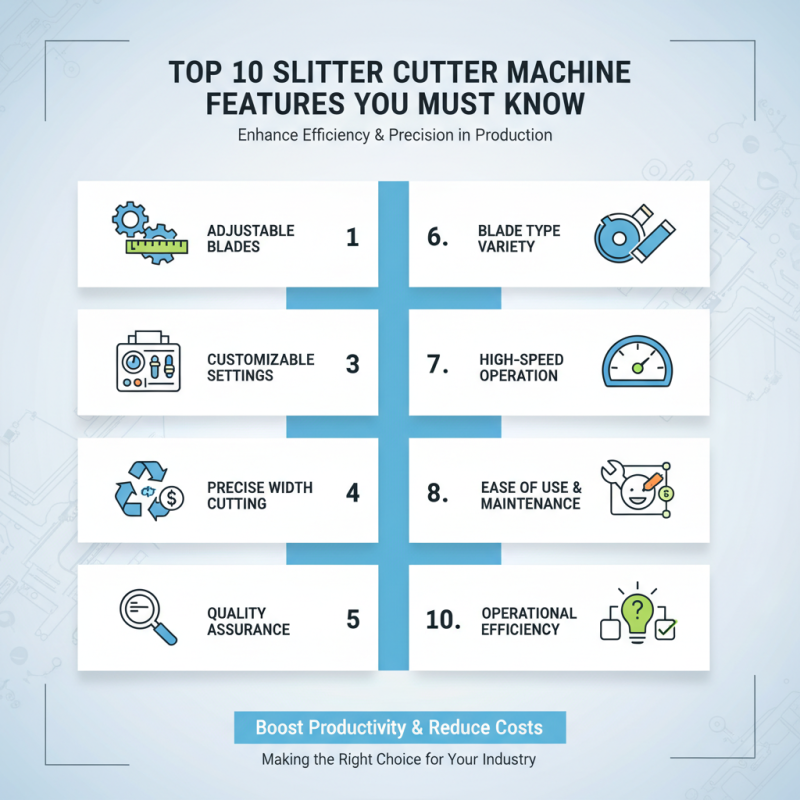
A Slitter Cutter Machine typically features adjustable blades and customizable settings. It allows users to cut materials into specific widths. This precision is vital in reducing waste and ensuring quality in production. However, not all machines offer the same functionality. Some may lack critical features that can impact performance.
Investing in a Slitter Cutter Machine requires careful consideration. Factors such as blade type, speed, and ease of use matter significantly. Not all machines are user-friendly or easy to maintain. This can lead to operational challenges and inefficiencies. Reflecting on these elements will help businesses make informed decisions.
Key Specifications to Consider in Slitter Cutter Machines
When considering slitter cutter machines, key specifications are critical. One vital factor is the cutting speed. Industry reports indicate that machines capable of achieving speeds over 500 m/min can significantly boost productivity. Precision is another critical aspect. Many slitter cutter machines offer tolerances of ±0.1 mm, which is essential for high-quality production.
Blade material plays a crucial role as well. High-speed steel blades are common, but carbide options can provide longer life and maintain sharpness under intense use. Durability often correlates with the choice of materials. However, it’s important to note that overly durable blades may lead to higher initial costs. User feedback reveals that these machines also require regular maintenance. Inadequate upkeep can lead to performance drops. Simple inspections can prevent significant downtime but are often overlooked.
Automation features are becoming increasingly important. Automated tension control and loading systems enhance efficiency, yet they can introduce complexities. Some users report a learning curve in adapting to these technologies. Overall, understanding these specifications helps in making informed decisions. However, many users express confusion over the ideal settings for their applications, indicating a need for better training and support in the industry.
Top 10 Slitter Cutter Machine Features You Must Know
| Feature | Description | Key Specification |
| Cutting Precision | The accuracy of the cut which ensures the pieces are of the desired size. | ±0.01 mm |
| Blade Material | Material used for the blades to enhance durability and cutting efficiency. | High-Speed Steel |
| Speed of Operation | Velocity at which the machine can operate during production. | 150 m/min |
| Adjustment Mechanism | Ease of adjustments to different cutting widths and diameters. | Manual & Automatic Options |
| Safety Features | Mechanisms in place to protect operators during operation. | Emergency Stop, Safety Guards |
| Power Consumption | Amount of power required to operate the machine efficiently. | 5 kW |
| User Interface | Control panel design and ease of use for the operator. | Touch Screen, User-Friendly Layout |
| Maintenance Requirements | Frequency and ease of maintenance for optimal performance. | Regular Lubrication, Monthly Check-Ups |
| Material Compatibility | Types of materials that can be cut with the machine. | Paper, Plastics, Metal |
| Size and Portability | Physical dimensions and ease of moving the machine. | Compact Design, Lightweight Structure |
Understanding Different Slitting Methods and Their Applications
Slitting methods play a crucial role in various industries. They determine how materials like paper, film, and metals are processed. Different slitting techniques can greatly impact the quality and efficiency of production. For instance, rotary slitting is common for flexible materials. It offers precision and is widely used in the packaging industry. According to a recent industry report, about 35% of manufacturing waste occurs due to improper slitting techniques.
Another common method is shear slitting. This technique uses blades that slide against each other, suitable for thicker materials. Many manufacturers prefer this method for metal slitting, as it provides a clean edge. However, it may require more maintenance. An estimated 20% of manufacturing downtime is linked to blade wear and replacement. This reflects a significant concern for efficiency.
Then there’s razor slitting, which is ideal for thin materials. While it provides excellent accuracy, the setup can be complex. Often, companies find it challenging to balance quality and speed. Understanding these methods is essential. An informed choice can lead to more sustainable practices and reduced costs in the long run.
Top 10 Slitter Cutter Machine Features
The Importance of Material Compatibility in Slitter Cutter Selection
When selecting a slitter cutter, material compatibility is crucial. Different materials respond uniquely to cutting processes. The right cutter must match the material's characteristics. For example, thin films require different settings compared to thicker sheets. Choosing the wrong cutter can lead to defects.
Understanding the properties of materials is important. Harder materials might dull blades faster. This means more frequent replacements or sharpenings, adding costs. Soft materials may require special blades to prevent tearing. It’s not just about the cutter; it's about the synergy between the machine and the material.
Testing is an essential step in the selection process. Many overlook this, assuming compatibility based on specifications. However, real-world performance can vary. Not every combination will yield ideal results. Companies should conduct trials to determine what works. Lack of attention here results in wasted resources and time.
Automation Features Enhancing Efficiency in Slitter Cutter Machines
Automation in slitter cutter machines is a game changer. It enhances efficiency and reduces waste significantly. According to recent industry reports, automated systems can boost production speed by up to 40%. Machines equipped with advanced automation features streamline processes, maintaining consistent quality.
Operators often find it challenging to adapt to new automation technologies. Training is essential, as is continuous learning. A survey indicated that over 60% of workers feel overwhelmed by rapid changes in technology. Investing time in upskilling is vital. Small adjustments in workflow can lead to substantial improvements.
Another notable feature is the ability to monitor performance in real time. This helps identify issues before they escalate. Data from the International Association of Machinery Manufacturers shows that companies utilizing real-time monitoring cut downtime by 30%. Embracing these automation features is critical for staying competitive.
Tip: Keep equipment well-maintained. Regular checks can prevent costly breakdowns and extend machine life. Encouraging open discussions about automation can help ease the transition for staff.
Maintenance Tips for Optimal Performance of Slitter Cutter Machines
Maintaining slitter cutter machines is essential for ensuring optimal performance. Regular maintenance can extend machine life significantly. A recent report from the International Slitter Association indicates that neglecting maintenance can lead to breakdowns, resulting in costs of up to $50,000 per incident. Operators must be aware of these costs to prioritize upkeep.
Daily checks are a must. Inspect blades for wear and tear. A worn blade can lead to inaccurate cuts, increasing waste. This not only affects production efficiency but also impacts material costs. Scheduled lubrication of moving parts reduces friction and prevents overheating. According to industry studies, machines with proper lubrication can perform 20% better than those that are poorly maintained.
Lastly, ensure the machine is kept clean. Dust and debris can hinder performance and lead to mechanical issues. A clean workspace reflects a professional operation. While many realize the importance of upkeep, some may overlook small details. These oversights can lead to bigger problems down the line. Reflecting on maintenance routines can reveal gaps in performance practices. Consistency is key in keeping slitter cutter machines running smoothly.

