10 Towel Display Rack Tips for Global Buyers
A Towel Display Rack can look simple in a product photo, yet small design choices affect daily use. For global buyers, the right rack must suit the towels, the store layout, and the way customers shop. A crowded aisle needs a compact footprint. A hotel supply showroom may benefit from clear size labels and easy-to-reach shelves. Small details matter. So does a reliable finish.
This guide shares ten practical tips for comparing racks across suppliers and markets. It covers materials, dimensions, load capacity, assembly, packaging, and display flexibility. Ask for measurements, product specifications, and clear photos before placing an order. Check whether shelves hold folded towels without sagging, and whether sample units feel stable on the floor. These checks help buyers compare products on evidence, not appearance alone.
A polished display is useful, but it is not the whole story. The rack should be easy to clean, refill, and move when store needs change. Consider shipping volume and replacement parts, too. Those costs can be easy to overlook. Product details and customer expectations also vary by region, so confirm requirements with your supplier rather than assuming one design fits every market. No checklist removes every risk; even a well-made rack may not suit a particular space. A sample review can reveal that. These tips are designed to support clearer questions, more consistent comparisons, and purchasing decisions grounded in real operating needs.
Understanding Towel Display Racks and Their Retail Uses
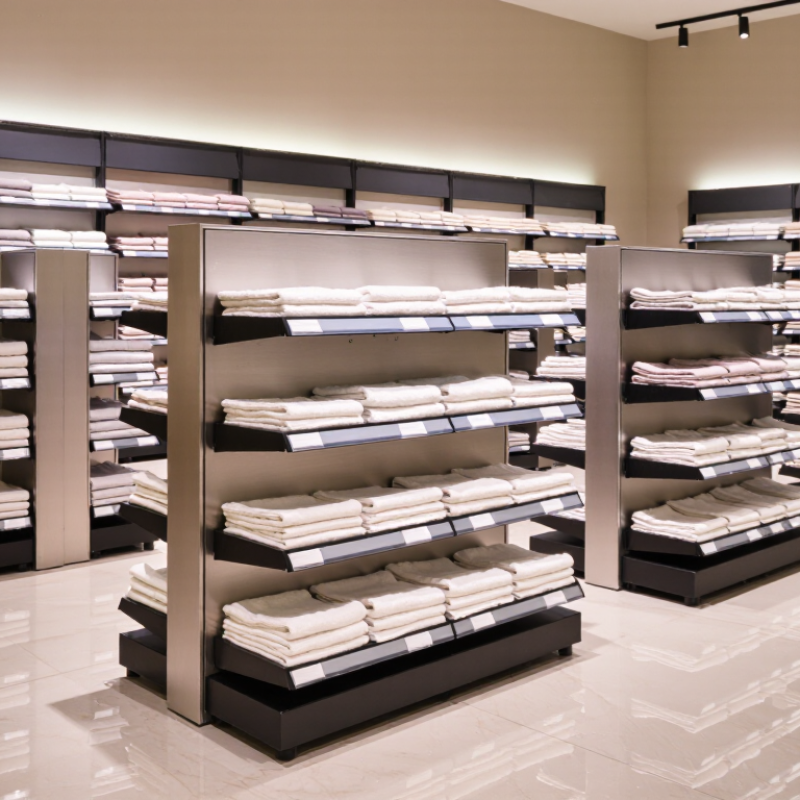
A towel display rack is a fixture designed to present folded or rolled towels clearly while keeping them easy to reach. Retailers use racks in bath, home, hotel-supply, and seasonal departments. Common options include freestanding units, wall-mounted shelves, and tiered racks with baskets. Each suits a different floor plan. A compact wall rack can save aisle space, while a freestanding rack may create a visible feature near a department entrance.
Placement affects how shoppers interact with the display. Keep popular towels within comfortable reach, and leave enough space for customers to browse without blocking the aisle. Open shelves make colors and textures easy to compare. Baskets can contain smaller items, but deep baskets may hide products at the bottom. Small details matter. Keep the display neat, and check that shelves do not sag under the intended load.
For global buyers, compare rack dimensions, materials, finish, and packing requirements before ordering. Confirm measurements in a consistent unit, and ask how the rack is assembled and cleaned. One detail is easy to overlook: a rack that looks spacious in a drawing may feel crowded once towels are stacked on it. Requesting a sample or reviewing a loaded display can reveal practical issues early. Not always. Store layouts and towel sizes vary, so the best rack is the one tested against the actual merchandise and floor space.
Matching Rack Materials, Capacity, and Design to Buyer Needs
A towel display rack should fit the buyer’s setting, not just look good in a catalog. For humid bathrooms or poolside areas, stainless steel or corrosion-resistant aluminum can be practical choices. In dry retail spaces, coated steel may offer a sturdy option at a lower cost. Ask suppliers how finishes are tested, and inspect samples when possible. A coating that looks smooth in a photo may chip around joints. Small details matter.
Capacity needs a closer look than the number of bars alone. Measure towel width, folded thickness, and the space between rails; crowded towels dry slowly and look untidy. Confirm the rack’s rated load and how that rating was tested. A wall-mounted model also depends on the wall surface and fixings, which may vary by project.
Design affects daily use: rounded edges, stable feet, and reachable rails help staff and customers handle towels comfortably. For international shipments, compare assembled dimensions with doorways, cartons, and storage plans.
There is no perfect rack. A high-capacity unit can be bulky, while a compact design may need frequent refilling. I have seen buyers focus on appearance and later reconsider after checking cleaning routines and floor space. Test the real use case before placing a large order.
Comparing Wall-Mounted, Freestanding, and Countertop Options
Wall-mounted towel racks keep floors clear and work well in compact bathrooms, spas, and guest rooms. They suit buyers who can confirm wall material, available fixing points, and installation access before ordering. A rack near a shower should leave enough space for towels to dry without touching a wet wall. Check the arm length and stated load capacity, not just the overall width. That detail matters. Still, wall-mounted models can be awkward when room layouts vary between sites.
Freestanding racks need no wall drilling and can move between rooms or display areas. They are useful for staged spaces, but a narrow base may wobble on uneven tile. Ask for the base dimensions and packed weight; both affect placement and shipping plans. Countertop racks occupy less floor space and suit folded hand towels beside sinks. Their capacity is limited, though, and water can collect beneath the base. Small footprint. Not always practical.
Tips: Compare all three styles using real measurements from the intended location. Request assembly instructions, material details, and load guidance from the supplier. For wall units, verify the mounting method fits the surface; for freestanding units, check stability on hard flooring. Countertop buyers should measure sink clearance and look for smooth, easy-to-clean contact points. I would not choose by appearance alone—one attractive rack can still block a cabinet door.
Checking Safety Standards, Packaging, and International Shipping
Start safety checks with the destination market, not a generic global checklist. Ask the supplier for material details, load-test results, and any applicable conformity documents. Check that the stated load reflects towels placed across the rack, not only weight concentrated at one point. Look closely at welds, sharp edges, coating coverage, and whether a freestanding unit rocks on a flat floor. Small details matter. Requirements differ by destination and product design, so confirm them with a qualified local importer or testing body.
Packaging deserves the same scrutiny. Ask for a packed sample or clear photos of the carton, foam, and corner protection. Metal bars can pierce thin cartons, while loose parts may scratch the finish during a long sea journey. Request individual wrapping, secured hardware bags, moisture protection where appropriate, and labels that match the packing list. Then check again. One easy-to-miss issue is carton orientation: a box marked upright may still be stacked sideways in transit.
Before booking, compare carton dimensions and gross weight with the freight quote; small changes can affect handling costs. Confirm who handles export packing, cargo insurance, and damage claims, and photograph cartons before dispatch. Ask the carrier or forwarder about route-specific restrictions and delivery access, especially for oversized shipments. Do not assume a rack arrives ready to sell. Build in time for inspection, assembly checks, and replacement parts; schedules can slip, and that risk is easy to underestimate.
10 Towel Display Rack Tips for Global Buyers: Safety, Packaging & Shipping
Approximate internal volume is about 33.2 m³ for a 20-foot container, 67.7 m³ for a 40-foot container, and 76.3 m³ for a 40-foot high-cube container. Actual dimensions vary by equipment, and usable space depends on rack and carton sizes. Before ordering, confirm applicable safety requirements, request load-test documentation, check protective packaging, and verify carton dimensions and shipping marks.
Evaluating Suppliers, Pricing, and Long-Term Value
For global buyers, supplier evaluation should begin with the rack’s working conditions, not a catalog photo. Ask for the material grade, tube dimensions, finish details, and stated load rating. Check whether that rating applies to evenly spread towels or one heavy load. That distinction matters. Request a sample and inspect the welds, sharp edges, wobble, and coating under bright light. Test it on the floor where staff will actually use it.
Compare quotations line by line: unit price, packaging, tooling, sample fees, shipping terms, and replacement parts. A low price can conceal thin tubing, weak joints, or cartons that arrive crushed. Ask how the supplier manages production tolerances and defects, rather than relying on a broad quality promise. Lead time matters too. Confirm production and transit estimates in writing, with room for seasonal delays.
Judge long-term value with a simple cost-per-year estimate. Include expected service life, cleaning effort, spare-part availability, and damage rates from your receiving records. If possible, test a loaded rack for several weeks; a showroom check will not reveal every loose joint. Still, estimates are estimates. Review them after installation, since actual use may differ from supplier assumptions. A higher quote may offer better value, but not automatically.