Why Choose a Vertical Machining Center?

Choosing a Vertical Machining Center is not simply a matter of buying a larger machine. It is a production decision shaped by part geometry, material, tolerance, and daily workload. In a typical shop, the machine may cut aluminum housings in the morning and hardened steel fixtures later. Its rigid column, vertical spindle, and accessible worktable can support accurate milling while keeping setup work practical. Operators can load the fixture from the front. They can inspect the workpiece without climbing around the machine. That matters during long production runs.

Manufacturing expert Taiichi Ohno said, “Without standards, there can be no improvement.” His principle applies directly to every Vertical Machining Center investment. Reliable results depend on repeatable tools, documented offsets, controlled cutting data, and disciplined maintenance. A well-chosen VMC can reduce handling, shorten setup time, and improve consistency across batches. It can also support drilling, tapping, contouring, and three-axis or five-axis operations, depending on its configuration. More capability is not always better. That assumption can fail.

The wrong spindle speed, weak workholding, or poor chip evacuation can erase the benefits of an expensive machine. Power consumption and operator training also deserve honest attention. A compact model may suit prototypes and small components. A heavier machine may better serve continuous production. The best choice comes from measured requirements, not showroom excitement. Review cycle times, tolerance records, tooling costs, and maintenance history before deciding. Practical evidence should lead the purchase.
Why Choose a Vertical Machining Center?

What Is a Vertical Machining Center?

Why Choose a Vertical Machining Center?

What Is a Vertical Machining Center?

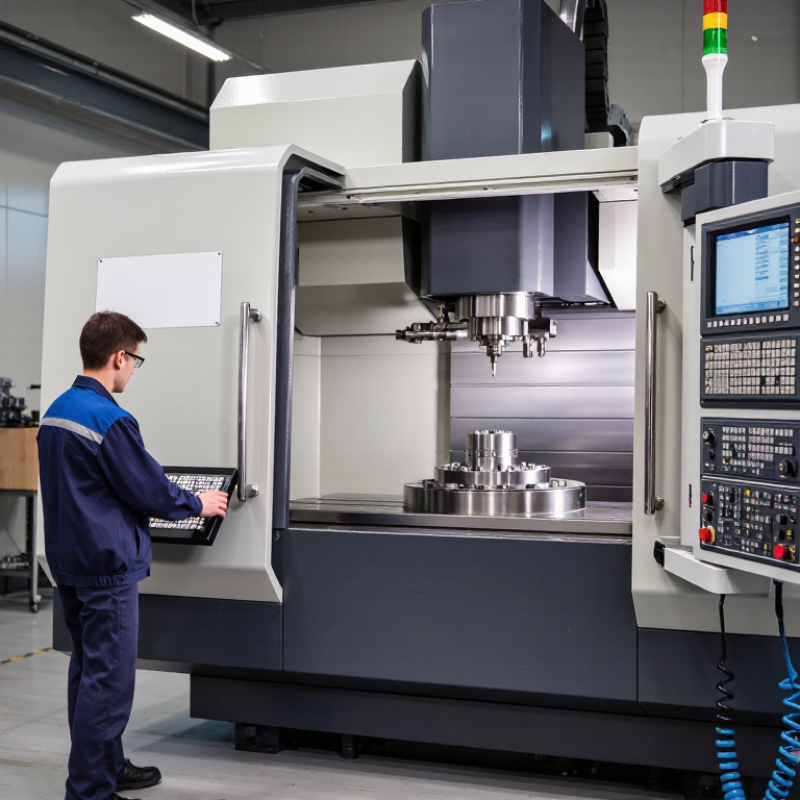
A vertical machining center, or VMC, is a computer-controlled machine tool. Its spindle moves vertically above a fixed workpiece. This arrangement supports milling, drilling, tapping, and boring operations. The machine uses programmed tool paths to cut metal or other suitable materials. A worktable holds the material securely during machining. Linear axes guide the cutter across precise positions. Many models also include automatic tool changing and coolant systems. These features reduce setup time and support repeatable production.

In practical workshops, a VMC is valued for its clear working area. Operators can often inspect the tool and workpiece from the front. This visibility helps during setup and routine checks. The vertical design also suits compact production spaces. However, it is not perfect for every component. Deep cavities may create chip evacuation problems. Long tools can also vibrate and reduce surface quality. Careful fixture design matters. My experience suggests that simple access can sometimes hide complex setup decisions.

Tips: Check the machine’s travel range before selecting a workpiece. Confirm spindle speed, tool capacity, and table load limits. Use rigid fixtures and measure tools before cutting. Keep chips away from finished surfaces. Start with a conservative feed rate. Then adjust it after checking sound, finish, and tool wear. Document the results. Small records often prevent repeated mistakes.

How Does a Vertical Machining Center Work?

Why Choose a Vertical Machining Center?

How Does a Vertical Machining Center Work?

A vertical machining center removes material with a rotating spindle positioned above the workpiece. The machine holds cutting tools in an automatic tool magazine. A programmed controller directs the spindle and table through precise movements. Most models use three linear axes, while advanced configurations add rotary movement. The cutting tool travels downward, sideways, or along the workpiece surface. Simple in concept.

The process begins with a digital part model and manufacturing program. CAM software converts toolpaths into machine instructions, commonly called G-code. The operator secures the material on the table and checks its position with a probe or measuring tool. The spindle then selects the programmed cutter and rotates at a controlled speed. Feed rate, cutting depth, coolant flow, and tool condition all affect the result. Small errors can become visible quickly.

In real workshops, setup quality often matters more than machine size. A loose fixture may cause vibration, poor surface finish, or dimensional errors. Tool wear also changes cutting performance during longer jobs. Experienced operators inspect the first part and adjust offsets when measurements disagree. That is not a failure. It is part of responsible machining. Still, relying on adjustments alone is risky; accurate drawings, stable workholding, and regular maintenance remain essential for repeatable production.

Key Advantages of Vertical Machining Centers

Why Choose a Vertical Machining Center?

Key Advantages of Vertical Machining Centers

A vertical machining center offers practical access to the workpiece from above. This layout simplifies loading, inspection, and fixture adjustment. Operators can see the cutting area clearly during setup. That visibility helps reduce alignment errors on complex components. A rigid column and table support stable milling under demanding conditions. The result is often consistent dimensional accuracy across repeated parts.

These machines also use floor space efficiently. Their upright structure fits many medium-sized workshops with limited room. Automated tool changing reduces manual intervention between drilling, tapping, and milling operations. One setup can complete several features, improving workflow and reducing repositioning errors. Coolant reaches the cutting zone effectively when the tool direction is suitable. Chip removal can also be predictable, although deep pockets may still require careful programming.

Versatility matters. A vertical center can handle prototypes, repair work, and production batches with suitable tooling. Digital probing can verify workpiece position before cutting begins. That extra check supports reliable results and protects valuable material. However, the advantage is not automatic. Poor fixture design, weak workholding, or incorrect cutting data can damage accuracy. I have seen efficient machines lose time because operators trusted default settings too much. Material behavior, tool wear, and thermal changes still require attention. Regular measurement remains essential, especially for tight-tolerance parts. Some shops may also find horizontal equipment better for deep cavities and difficult chip evacuation.

Common Applications Across Manufacturing Industries

Why Choose a Vertical Machining Center?

Vertical machining centers support varied production work because the spindle approaches parts from above. This layout simplifies fixture access and improves visibility during setup. In job shops, operators can machine plates, brackets, housings, and molds on one platform. A typical VMC can combine milling, drilling, tapping, and thread cutting in one cycle. That reduces handling between machines. It also helps control errors on parts with several related features.

Aerospace suppliers often use VMCs for aluminum structures and titanium fittings. Automotive plants apply them to tooling, engine components, and prototype parts. Medical manufacturers machine stainless steel and cobalt-chrome components, where surface quality and traceability matter. Energy equipment producers use larger VMCs for valve bodies, flanges, and pump components.

According to the International Federation of Robotics’ World Robotics 2024 report, factories installed 541,302 industrial robots in 2023.

This growth encourages integrated machining cells, although automation alone does not guarantee better output.

Deloitte’s 2024 Smart Manufacturing and Operations Survey found that 86% of surveyed manufacturing leaders expect smart manufacturing to be a major competitiveness driver within three years. A VMC can support that shift through tool monitoring, probing, and production data collection.

Still, choosing one only by spindle speed can be a costly mistake. Workholding, chip control, operator skill, and maintenance access often decide real performance. The best machine is not always the largest. Sometimes, a simpler setup wins.

How to Choose the Right Vertical Machining Center

Why Choose a Vertical Machining Center?

How to Choose the Right Vertical Machining Center

Choosing a vertical machining center starts with the part, not the machine brochure. Measure your largest workpiece, including fixtures and tool access. Leave room for clamping and chip removal. Tight spaces create expensive compromises.

Match the machine’s travels to your actual production range. A larger table is not always better. It consumes floor space and may reduce acceleration. Check spindle speed, torque, taper size, and motor performance across your materials. Aluminum needs speed, while hardened steel often demands steady torque. Confirm the machine can hold your required tolerances repeatedly, not just during a factory test.

I once selected a machine by spindle power alone. That shortcut was a mistake. The control system, tool magazine, coolant delivery, and chip evacuation affected daily output more than expected. Review cycle time with realistic tools and cutting data. Ask about service response, spare parts, operator training, and software updates. Reliability includes support after installation.

Consider the complete cost. Energy use, maintenance, tooling, and downtime can outweigh the purchase price. Inspect the workspace, door opening, foundation, and loading method before ordering. Speak with operators who run similar materials. Their practical warnings may reveal details that specifications miss. Then compare verified test cuts, not optimistic promises.